Recyclatanteil, translated as the recycled content share, has become a defining metric in modern sustainability strategies. We recognize recyclatanteil as a measurable indicator that expresses the proportion of recycled material used in a product, packaging, or material stream. Across industries such as packaging, construction, automotive manufacturing, consumer goods, and textiles, recyclatanteil has evolved into a benchmark for environmental responsibility, regulatory compliance, and competitive differentiation.
As global supply chains adapt to stricter environmental regulations and heightened consumer awareness, recyclatanteil stands at the center of the circular economy. We approach this topic with a comprehensive, data-driven perspective, outlining definitions, applications, calculation methodologies, regulatory frameworks, and economic implications in a single authoritative resource.
Understanding Recyclatanteil in Material Science and Industry
Recyclatanteil represents the percentage of recycled input material incorporated into a finished product. This recycled input may consist of post-consumer recyclate (PCR) or post-industrial recyclate (PIR). We differentiate these categories to ensure clarity in reporting and transparency in sustainability claims.
Post-consumer recyclate originates from products that have completed their lifecycle and entered waste streams, while post-industrial recyclate derives from manufacturing scrap reused within production processes. A high recyclatanteil signals reduced reliance on virgin raw materials, lower carbon emissions, and optimized resource efficiency.
Recyclatanteil as a Pillar of the Circular Economy
In the circular economy model, recyclatanteil functions as a quantifiable performance indicator. We use it to evaluate how effectively materials are kept in circulation rather than disposed of as waste. A rising recyclatanteil contributes to closing material loops, reducing landfill volumes, and minimizing environmental impact.
Industries that strategically increase recyclatanteil benefit from long-term resource security and cost stabilization. By decreasing dependence on finite raw materials, organizations mitigate exposure to price volatility and supply disruptions, particularly in energy-intensive sectors.
Regulatory Frameworks and Legal Requirements for Recyclatanteil
Governments and regulatory bodies worldwide are embedding recyclatanteil requirements into legislation. Within the European Union, directives such as the EU Packaging and Packaging Waste Regulation (PPWR) and the Circular Economy Action Plan establish binding minimum recycled content thresholds for plastic packaging.
We observe similar regulatory momentum in North America and Asia-Pacific markets, where recyclatanteil targets are increasingly enforced through extended producer responsibility schemes. Compliance is no longer optional; verified recyclatanteil reporting is becoming a legal prerequisite for market access.
Calculating Recyclatanteil with Precision and Transparency
Accurate calculation of recyclatanteil requires standardized methodologies. We calculate recyclatanteil as the ratio of recycled material input to the total material input by mass. This calculation must exclude additives, coatings, and non-recyclable components unless explicitly specified in regulatory guidance.
Third-party certification systems such as ISO 14021, EN 15343, and mass balance approaches are widely adopted to verify recyclatanteil claims. Transparent documentation ensures credibility, prevents greenwashing, and supports trust among stakeholders.
Economic Advantages of High Recyclatanteil
A consistently high recyclatanteil delivers tangible economic benefits. We identify cost efficiencies through reduced raw material procurement, improved waste management, and eligibility for eco-incentives. Products with certified recyclatanteil often command premium positioning in sustainability-driven markets.
Additionally, companies that lead in recyclatanteil adoption enhance brand reputation and investor confidence. Environmental, social, and governance (ESG) performance metrics increasingly incorporate recyclatanteil as a decisive factor in capital allocation and risk assessment.
Recyclatanteil in Packaging and Consumer Goods
Packaging remains the most visible application of recyclatanteil. We integrate recycled plastics, paper fibers, glass cullet, and metals to achieve compliance with regulatory targets while maintaining functional performance.
High recyclatanteil packaging reduces carbon footprints and aligns with consumer expectations for environmentally responsible products. Advanced material engineering enables the use of recycled content without compromising barrier properties, durability, or aesthetics.
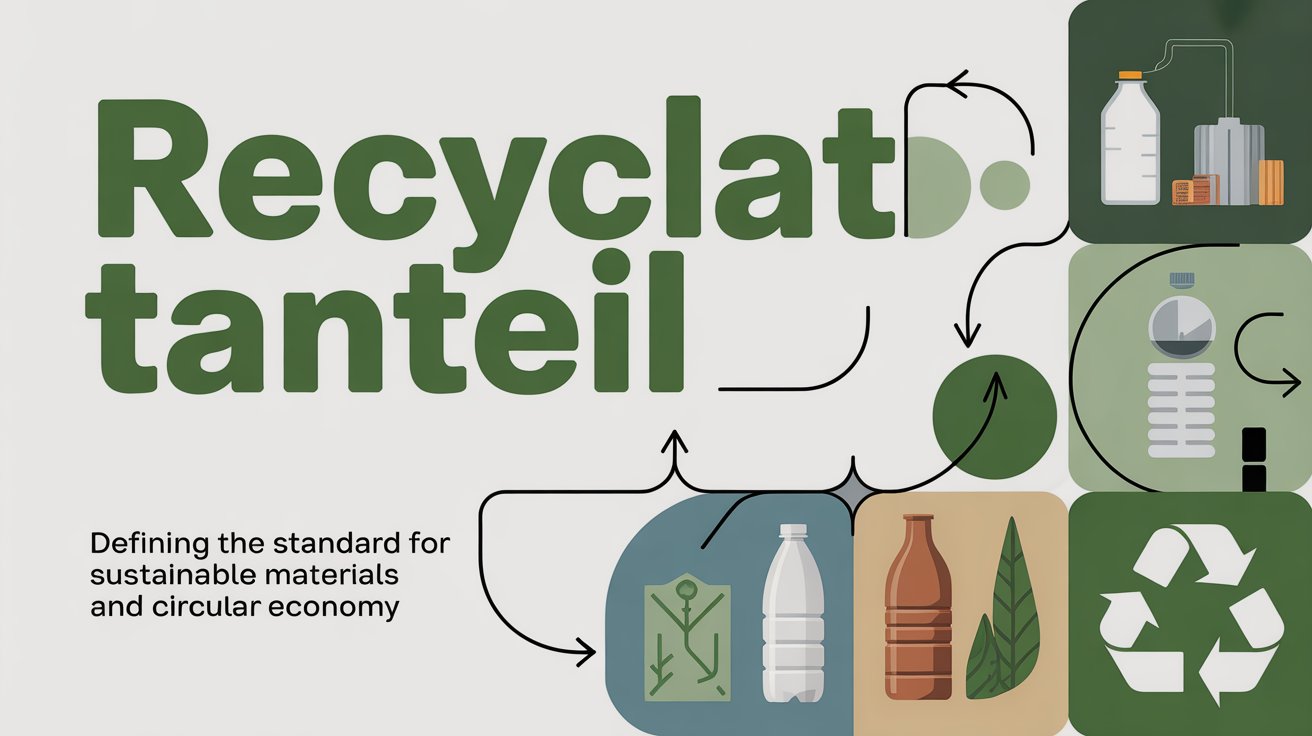
Technological Innovations Driving Higher Recyclatanteil
Technological advancement is accelerating achievable recyclatanteil levels. We leverage innovations such as chemical recycling, advanced sorting technologies, and digital material tracking systems. These solutions improve recyclate quality, expand usable material streams, and enable closed-loop systems.
Digital product passports and blockchain-based traceability enhance verification processes, ensuring that reported recyclatanteil reflects actual material flows rather than estimations.
Challenges and Strategic Solutions in Increasing Recyclatanteil
Despite its benefits, increasing recyclatanteil presents challenges. Variability in recyclate quality, limited supply, and contamination risks require proactive management. We address these obstacles through supplier partnerships, long-term sourcing contracts, and investment in recycling infrastructure.
Design-for-recycling principles further support higher recyclatanteil by simplifying material compositions and facilitating efficient end-of-life processing.
Recyclatanteil as a Competitive Differentiator
Organizations that lead in recyclatanteil implementation distinguish themselves in competitive markets. We position recyclatanteil not merely as a compliance metric but as a strategic value driver. Transparent communication of recyclatanteil achievements strengthens customer loyalty and aligns with sustainability-driven procurement criteria.
Future Outlook: The Evolution of Recyclatanteil Standards
The future of recyclatanteil is defined by rising benchmarks and expanding scope. We anticipate mandatory minimums across additional material categories, harmonized global standards, and increased scrutiny of lifecycle impacts.
Continuous innovation, data transparency, and cross-sector collaboration will determine success in meeting evolving recyclatanteil expectations.
Conclusion
Recyclatanteil has emerged as a cornerstone of sustainable production and circular economy strategies. We view it as an essential metric that integrates environmental responsibility with economic performance. Through accurate measurement, regulatory alignment, and technological innovation, recyclatanteil enables industries to reduce environmental impact while maintaining competitiveness. Its strategic relevance will continue to grow as sustainability becomes inseparable from business excellence.
Frequently Asked Questions (FAQ)
What does recyclatanteil mean in sustainability reporting?
Recyclatanteil refers to the percentage of recycled material used in a product or packaging, serving as a key indicator of circularity and resource efficiency.
How is recyclatanteil verified?
Verification is conducted through recognized standards such as ISO 14021, EN 15343, and certified mass balance systems, often supported by third-party audits.
Why is recyclatanteil important for compliance?
Many regulations mandate minimum recycled content levels. Accurate recyclatanteil reporting ensures legal compliance and market access.
Does higher recyclatanteil affect product quality?
With advanced processing and material engineering, high recyclatanteil products can meet or exceed performance standards of virgin-material alternatives.
Which industries benefit most from high recyclatanteil?
Packaging, construction, automotive, textiles, and consumer goods industries gain significant environmental, economic, and reputational advantages.